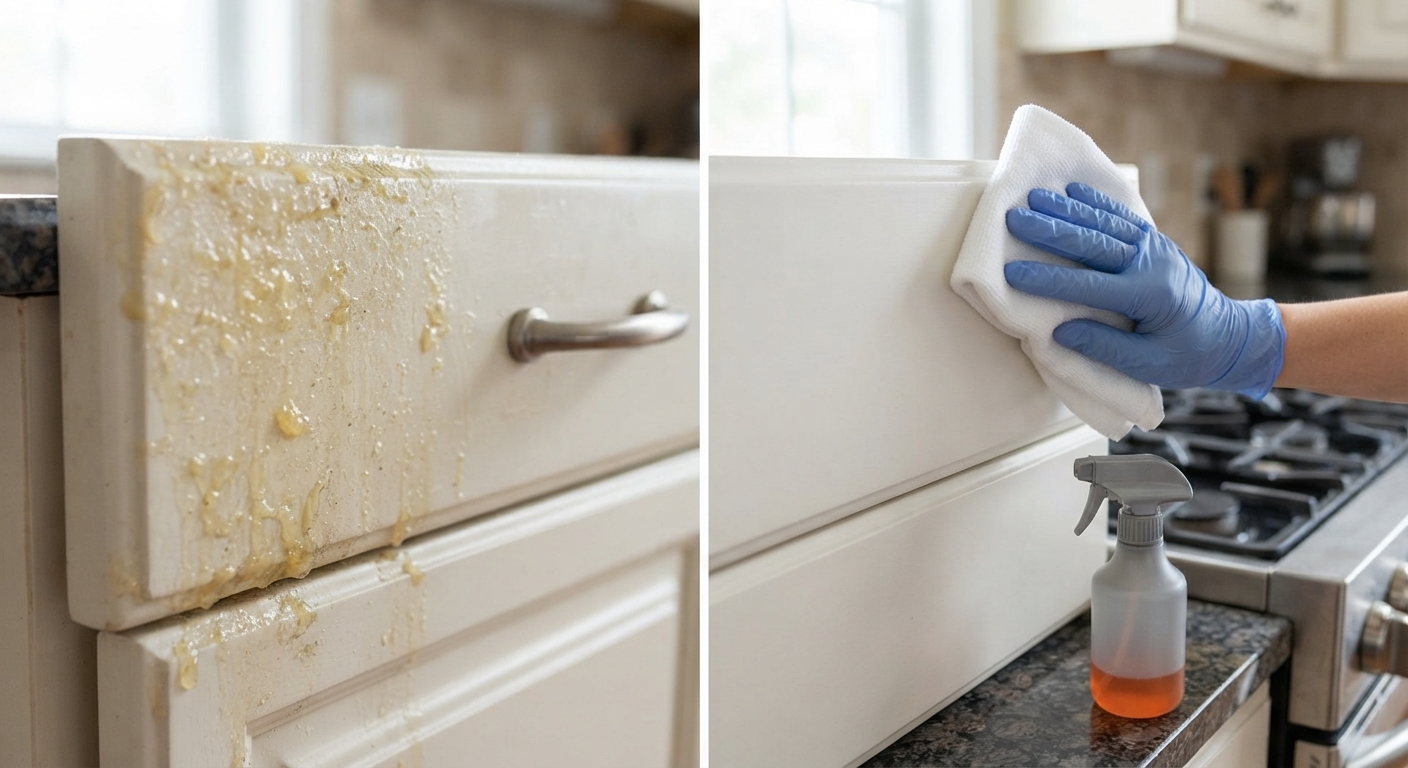
How to Remove Hardened Sticky Grease Film from Kitchen Cabinets and Fixtures
Understanding the Enemy: Why Kitchen Grease Turns Sticky and Hard
If you have ever noticed a gummy, yellowish layer on your cabinet doors, light fixtures, or switchplates, you are dealing with polymerized grease. When microscopic droplets of cooking oil float into the air, they combine with dust and moisture, eventually setting onto nearby surfaces. Over time, exposure to air and heat causes these oils to chemically alter and harden into an adhesive-like film that standard household sprays and water simply smudge around.
Step-by-Step Professional Degreasing Workflow
To safely break down this tough bond without peeling away your cabinet paint or wood finishes, follow this targeted chemical extraction process.
Step 1: The Thermal Softening Phase
- The Action: Before applying heavy cleaning solutions, weaken the grease matrix using localized heat.
- The Execution: Soak a thick microfiber cloth in hot water (as warm as your hands can safely handle) and hold it firmly against the sticky area for 30 to 60 seconds. This simple step softens the hardened oils, making them far easier for your cleaning solutions to dissolve.
Step 2: Applying the Optimal Solvent Formula
- The Action: Introduce a surfactant that splits oil molecules apart on contact.
- The Execution: Mix a highly concentrated dish soap (known for its oil-emulsifying properties) with warm water, or use a specialized orange-oil solvent. Apply the mixture evenly across the sticky surface using a soft sponge. Let it sit for 2 to 3 minutes to deeply penetrate the layer.
Step 3: Non-Abrasive Agitation and Rinsing
- The Action: Lift the suspended grease away without scratching the underlying material.
- The Execution: Gently scrub in circular motions using a non-scratch scrubbing pad or a clean microfiber cloth. Once the sticky texture yields, wipe the entire surface down with a fresh cloth dampened only with clean, cool water to remove all chemical residues. Dry immediately with a towel to prevent wood warping.
Surface-by-Surface Degreasing Quick-Reference Matrix
Not all kitchen fixtures can handle the same cleaning pressure or chemical solutions. Use this reference to protect your home's surfaces.
| Target Kitchen Surface | Primary Hazard Risk | Recommended Degreasing Method | Post-Clean Action Required |
|---|---|---|---|
| Painted or Stained Cabinets | Stripping clear coats or paint | Concentrated dish soap or wood-safe oil solvents | Wipe dry immediately with a clean microfiber |
| Metal Light Fixtures & Knobs | Corrosion or tarnishing | Soaking in warm water and grease-cutting dish soap | Hand-buff with a dry cloth to prevent spots |
| Plastic Outlets & Switchplates | Electrical shock or plastic bleaching | Isopropyl alcohol or soap damp-wipe (power off) | Ensure completely dry before restoring power |
Hardened Kitchen Grease Frequently Asked Questions
Can I use baking soda to scrub off sticky grease?
While baking soda is an excellent cleaner, it is a mild abrasive. Scrubbing dry baking soda directly onto painted or varnished wood cabinets can scratch or dull the protective finish. Always dissolve it into a soft paste or stick to liquid dish soap solutions first.
Why does vinegar fail to clear up heavy, sticky kitchen grease film?
Vinegar is an acid, which makes it fantastic for breaking down mineral scale and water spots. However, acids are ineffective at dissolving heavy fats and oils. To break down a polymerized grease film, you need an alkaline solution (like soap or baking soda) or an oil-based solvent.
How can I prevent sticky grease from building up again?
The most effective prevention methods are running your range hood vent every single time you cook to trap airborne oils, and performing a quick, 5-minute wipe-down of surrounding cabinet faces once a week using a mild dish soap spray.